PowerFilter
ControlIt PowerFilters help preserve and protect the DCC signal and voltage levels on model train layouts.
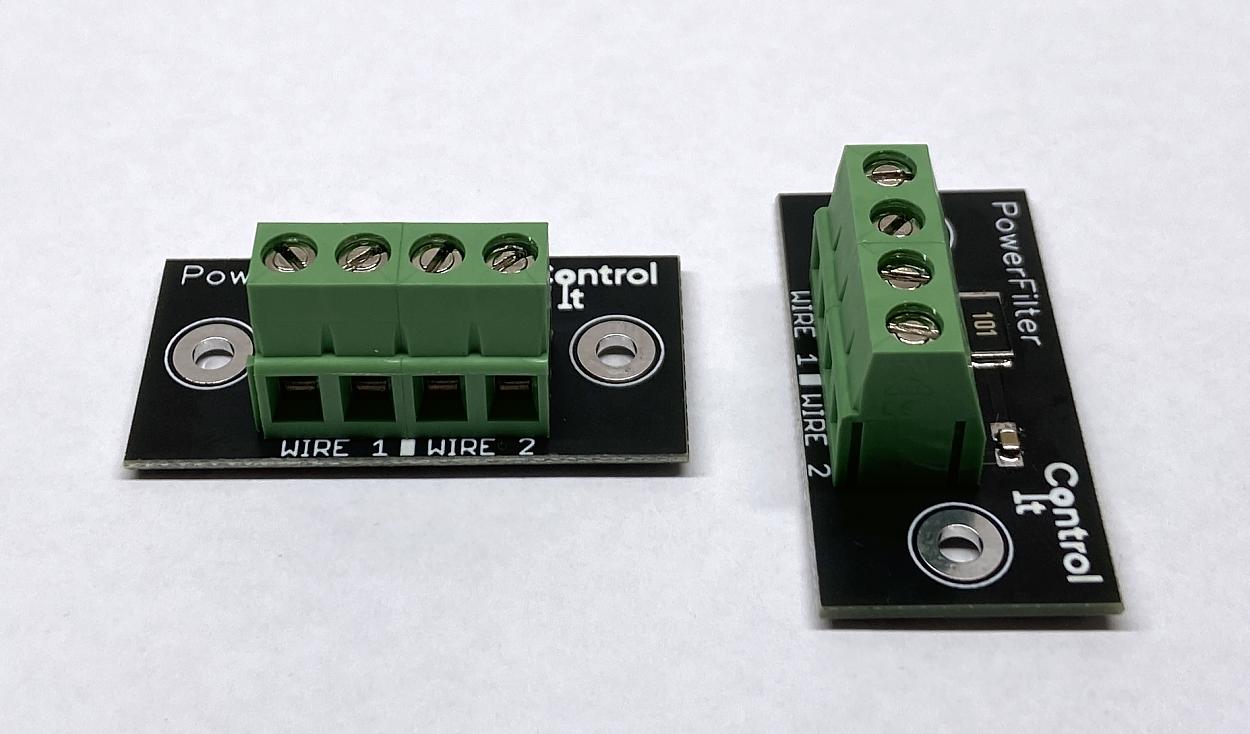
ControlIt PowerFilters
ControlIt PowerFilters (also known as snubbers or terminators) are designed for use on layouts of any size and scale with systems that conform to the NMRA DCC specifications and standards. PowerFilters maintain the integrity of the DCC signal along the length of a DCC power bus by filtering out unwanted frequencies, noise and voltage spikes.
ControlIt PowerFilters are suitable for all layouts and are highly recommended for DCC power bus lengths longer than 10 metres (30 feet) or where DCC systems of 6 Amps or higher current are used.
ControlIt PowerFilters can especially assist if you have experienced:
- Intermittent loss of control or lack of immediate response when operating locomotives
- Locomotive runaways
- DCC decoders losing their programmed configuration
- DCC decoders being destroyed
With four screw terminals accomodating 0.4mm (26AWG) to 2mm (12AWG) diameter wire, along with 3mm (1/8") mounting holes, PowerFilters are easy to install.
PowerFilter pricing:
- PowerFilter: AUD $9.50 each
- Shipping: AUD $8.00 each to anywhere in Australia. Other countries: calculated at the time of invoicing. Postage will be combined wherever possible.
Payment:
- Direct Deposit is the preferred payment method for orders in Australian Dollars (AUD), details are provided at the time of invoicing
- PayPal is the preferred payment method for orders outside of Australia
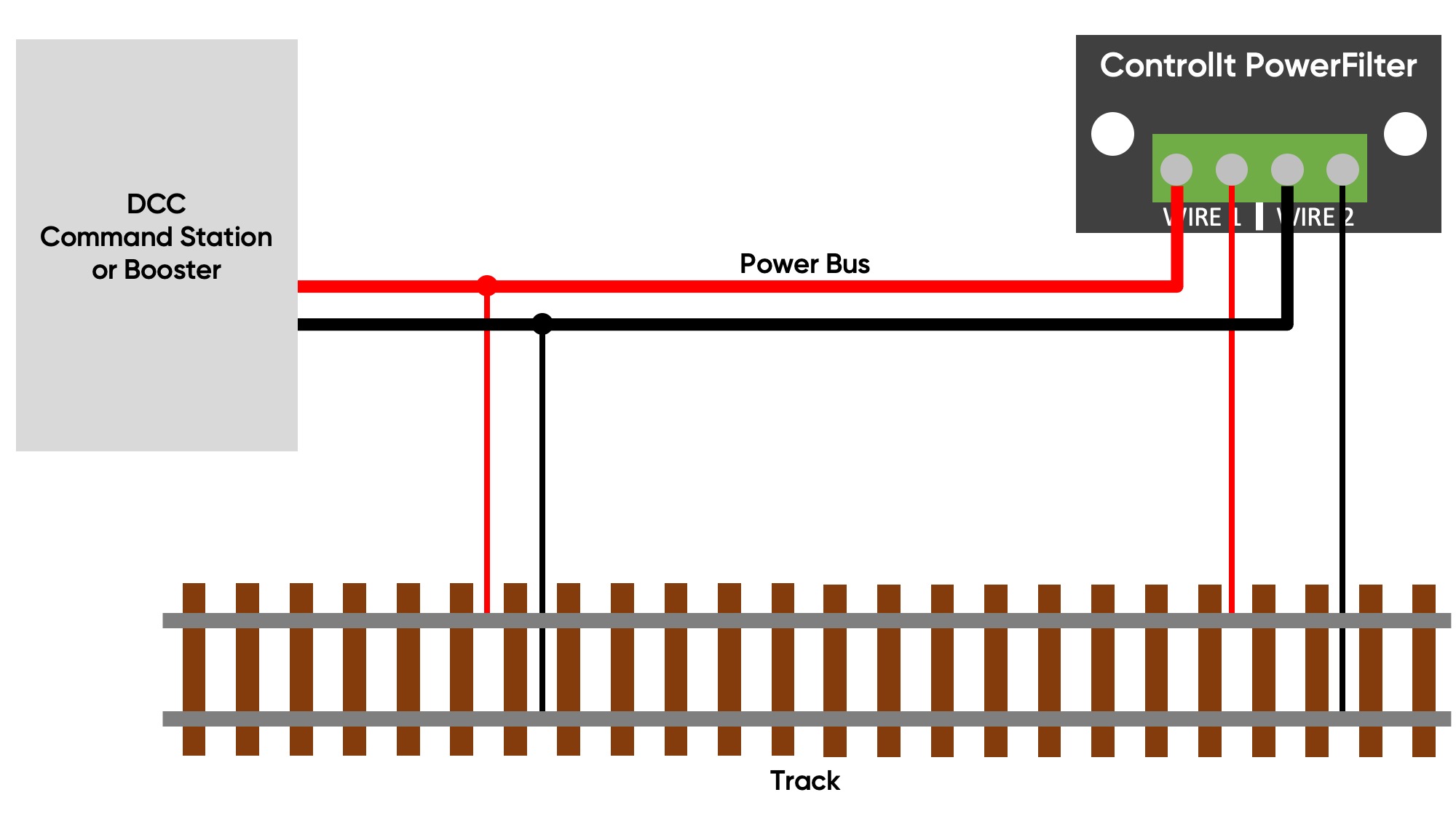
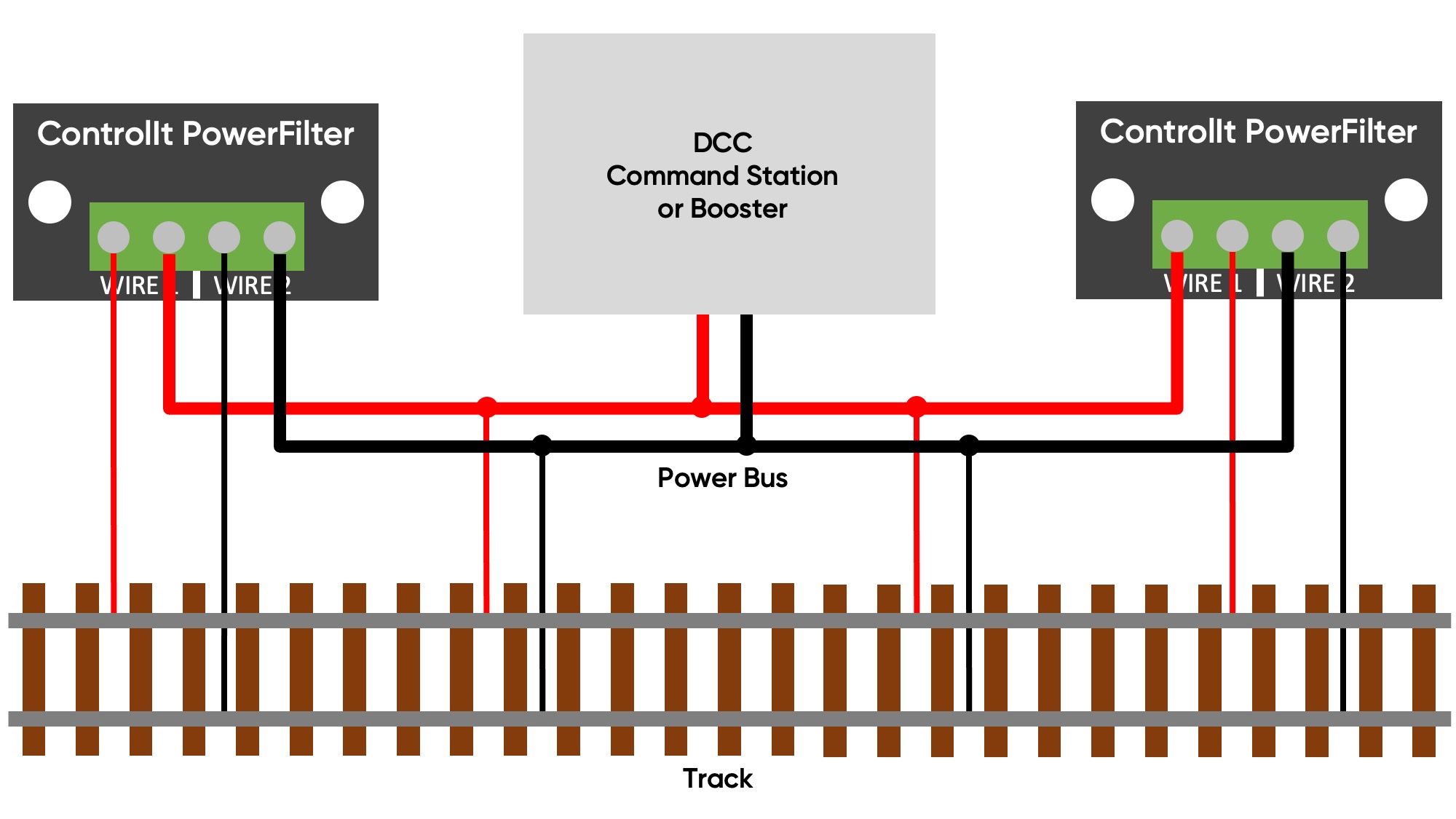
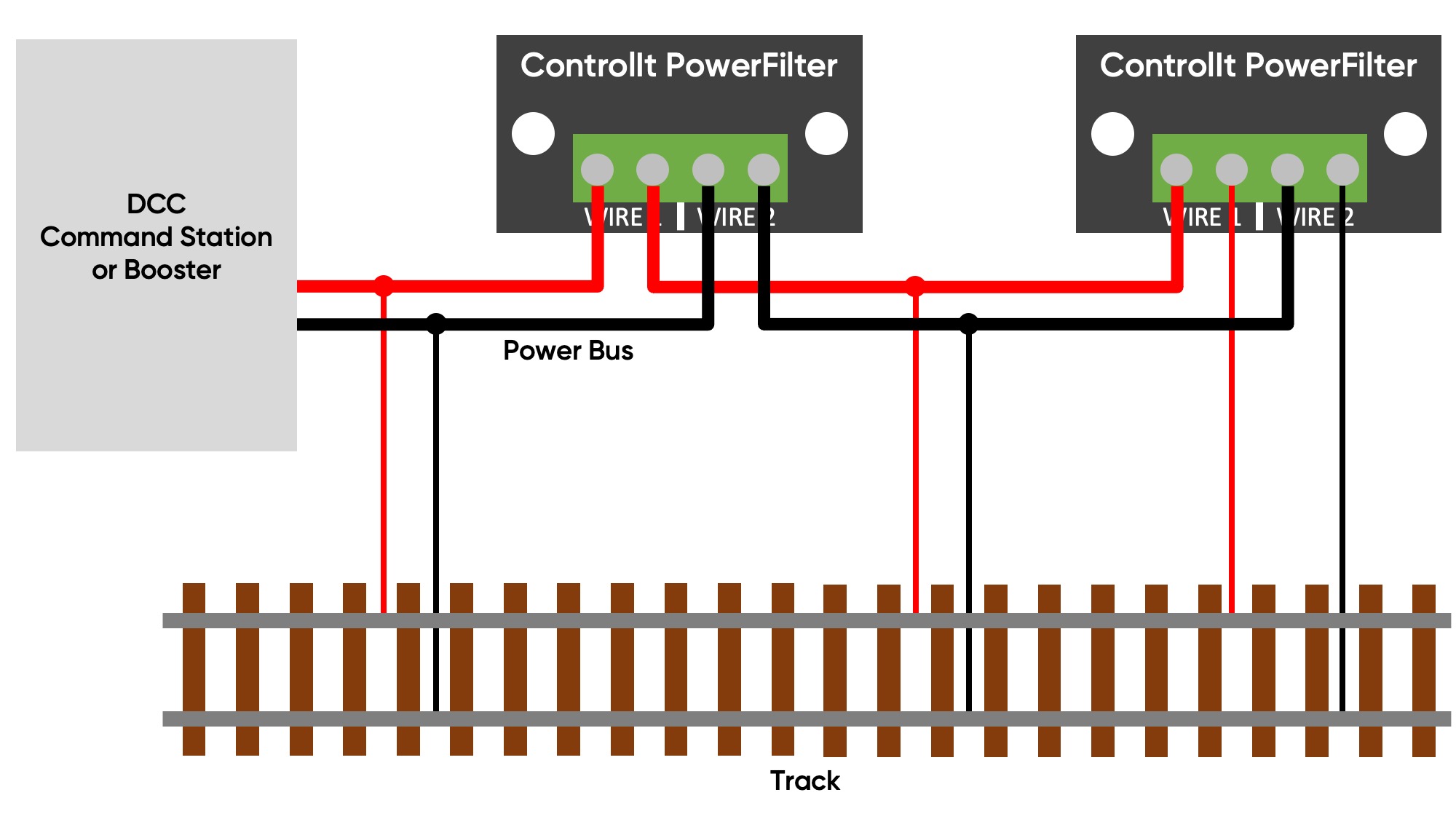
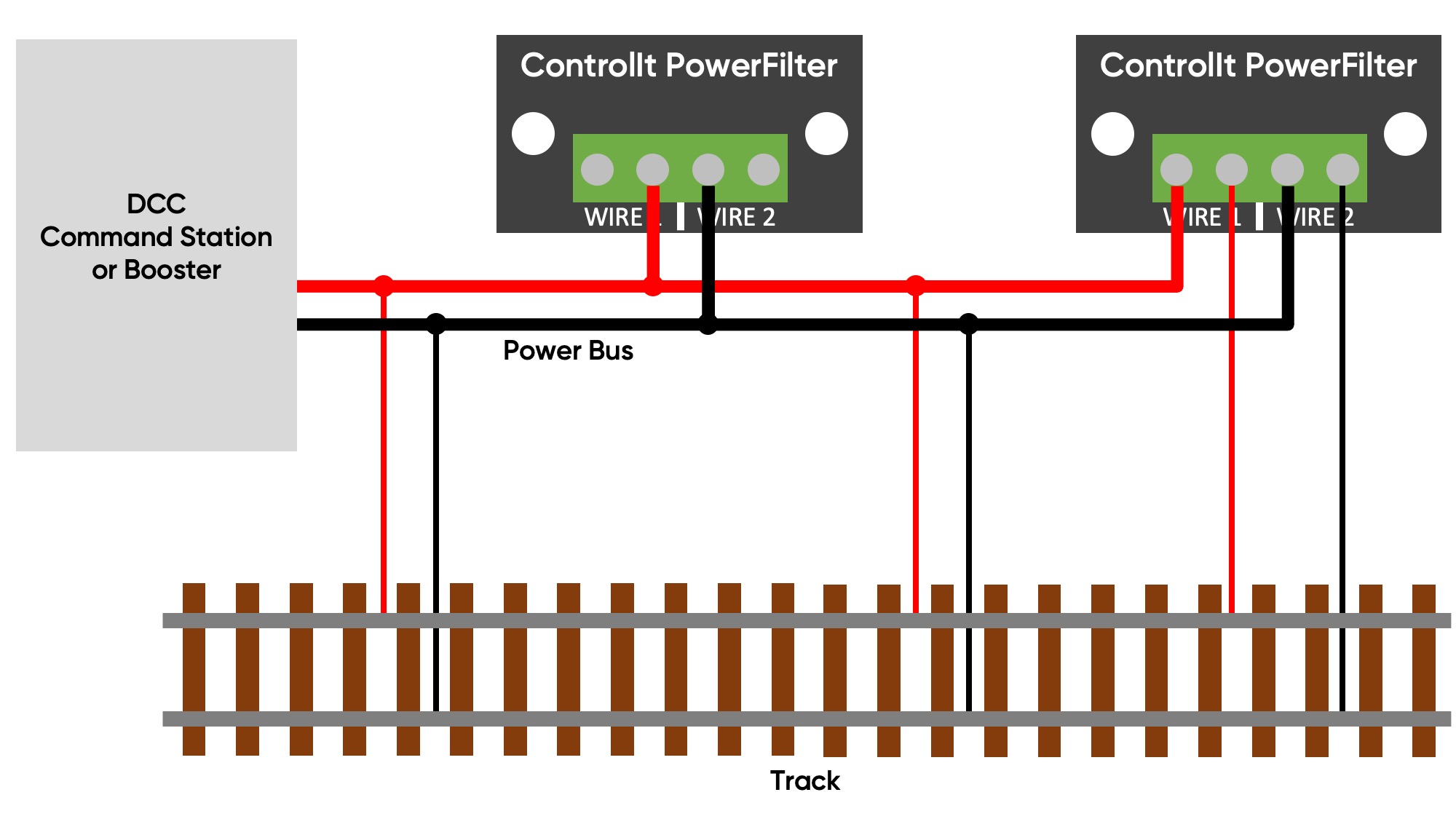
Installation recommendations: Start with installing a PowerFilter at the end of a DCC power bus furthest away from the command station or booster. If issues are still being experienced in certain areas of the layout, additional PowerFilters can be added at those areas along the power bus. For layouts fitted with current sensing train detectors, any PowerFilters must be installed before the detectors (ie: not between the detector and the track).
PowerFilter Installation Diagrams